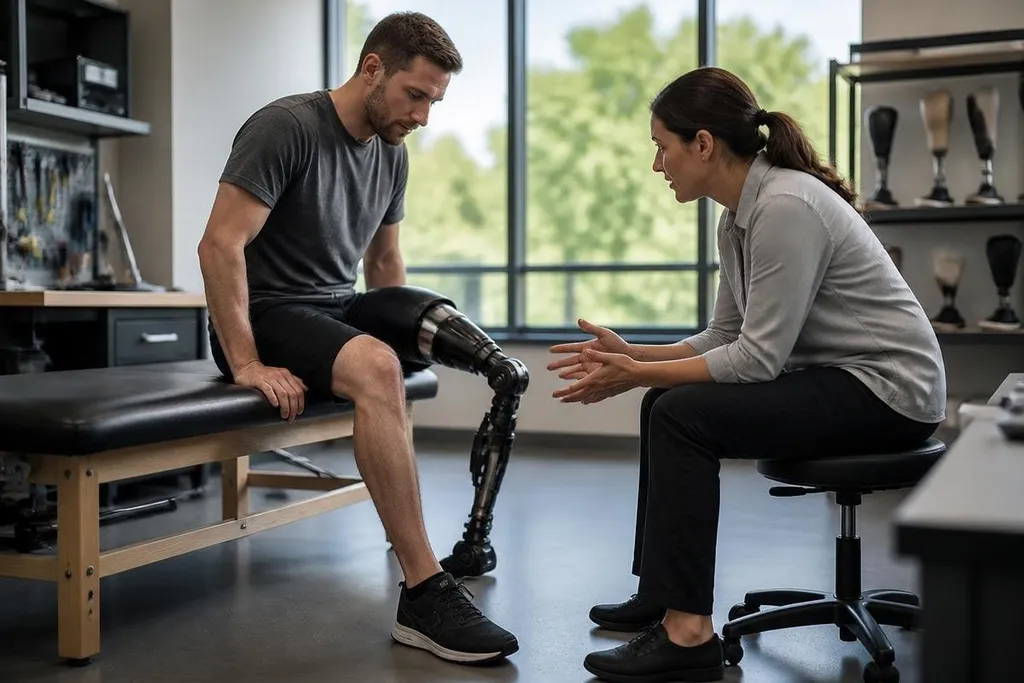
A robotic prosthetic can move a knee, ankle, hand, or elbow with motors and sensors. The hard part is making the limb respond to the person without constant conscious effort, while keeping the socket comfortable for daily use.
For someone comparing prosthetic options, the useful question is not how many motors a limb has. It is how the control system reads intent, how the limb reacts to contact, and what happens when the signal becomes noisy.
Quick read
- Muscle signals can guide movement through EMG electrodes.
- Force and position sensors help the limb react to the ground or an object.
- Touch feedback remains an open problem for many robotic prostheses.
How robotic control works
Many powered prostheses start with electromyography, or EMG. Electrodes placed near a remaining muscle read small electrical signals when the person tries to move. Software turns those signals into commands for a motor or joint.
That process sounds direct, but muscle signals change with sweat, socket pressure, fatigue, and limb position. A system that works while standing may respond differently after several hours of walking. Good control therefore needs more than a single signal from one electrode.
A robotic knee may combine muscle input with data from an angle sensor, an accelerometer, and a load cell. An angle sensor measures joint position. A load cell measures force.
Together, those signals help the controller tell the difference between standing, walking, and stepping down.
The same idea applies to a robotic hand. Motor position tells the system where the fingers are, while force sensors can show when an object is being squeezed. That matters for tasks such as holding a cup, where a fixed grip can spill the drink or crush a thin container.
The missing sense of touch
Movement is only half the job. A biological limb also gives the brain information about pressure, movement, and contact. Robotic prosthetics can measure those signals, but sending them back to the nervous system is harder.
Researchers have tested several routes, including vibration on the skin, electrical stimulation of nerves, and direct links with muscle or bone. Each method changes the information a person receives. Vibration can signal pressure without surgery, while nerve stimulation may offer a closer link to the missing limb.
The useful test is daily control. A person needs to know when a foot has reached the floor or when a hand is touching an object. A lab task can show that a signal is detectable, but it doesn't prove that the signal stays useful during a full day of movement.
Comfort can decide whether a new control method survives beyond the lab. Robotic prosthetics reporting from Robot24.com can tie claims about daily use to a named device, test setting, and date before you decide if the design fits real life.
Comfort sets the limit
The socket still carries much of the load for many prosthetic users. It must stay attached during movement without pressing too hard on skin and soft tissue. A motor can be strong and the control software can be quick, yet poor fit can make the limb hard to wear.
Some systems use osseointegration, where an implant connects the prosthesis to bone. This can create a direct mechanical attachment, but surgery, healing, infection risk, and long-term care remain part of the decision. The hardware cannot be judged apart from the body that carries it.
Weight also changes the result. Batteries, motors, sensors, and processors add mass. A powered joint may reduce effort during one task while adding weight during every step. The right design depends on the person’s residual limb, strength, work, walking pattern, and access to repair support.
I’d judge a robotic prosthesis by the number of useful hours it gives the wearer, not by its motor count.
A practical buying checklist
Before you compare a robotic prosthesis, check:
- Control method: Ask which signals guide movement and how the system handles weak or changing EMG signals.
- Battery routine: Find the stated charge time, expected use period, and replacement cost.
- Socket support: Confirm who makes adjustments and how often follow-up visits are needed.
- Repair path: Ask where motors, sensors, and batteries are serviced if a part fails.
- Feedback method: Find out what pressure or contact information reaches the wearer, if any.
- Evidence level: Separate an approved product from a research prototype or a short lab study.
The field will move forward when control, comfort, and feedback work together outside the lab. Until then, the most useful number is the hours a wearer can use the limb in ordinary life before pain, charging, or signal drift ends the day.